Three generations. One iron key. Still hanging on the wall.
There was a war. His grandfather left the village of Al-Zeeb in May 1948 with a few things stuffed into his pockets: land papers, a photograph, and a house key. I'll be back in a few weeks. That's what he thought. Maybe that's what he said. The village is gone now, no trace of it left, but the key made it to Gaza. It hangs there still, on the wall of a tent, older than anyone alive who remembers what door it opened.
The First Generation
Detachments of the Carmeli Brigade took Al-Zeeb in one night, under the banner of Operation Ben-Ami. The villagers left fast. They had to.
Walid Khalidi's All That Remains documents 418 Palestinian villages erased in 1948. Al-Zeeb is one entry among them: name, population, geography, date. Statistics, yes. But also houses. Also a beach that one old man talked about for the rest of his life.
That year, 750,000 Palestinians were displaced. When UNRWA was founded in 1950, it was built around that number, a temporary relief agency, everyone assumed, because surely people would return soon. The old man waited. He never returned.
The Second Generation
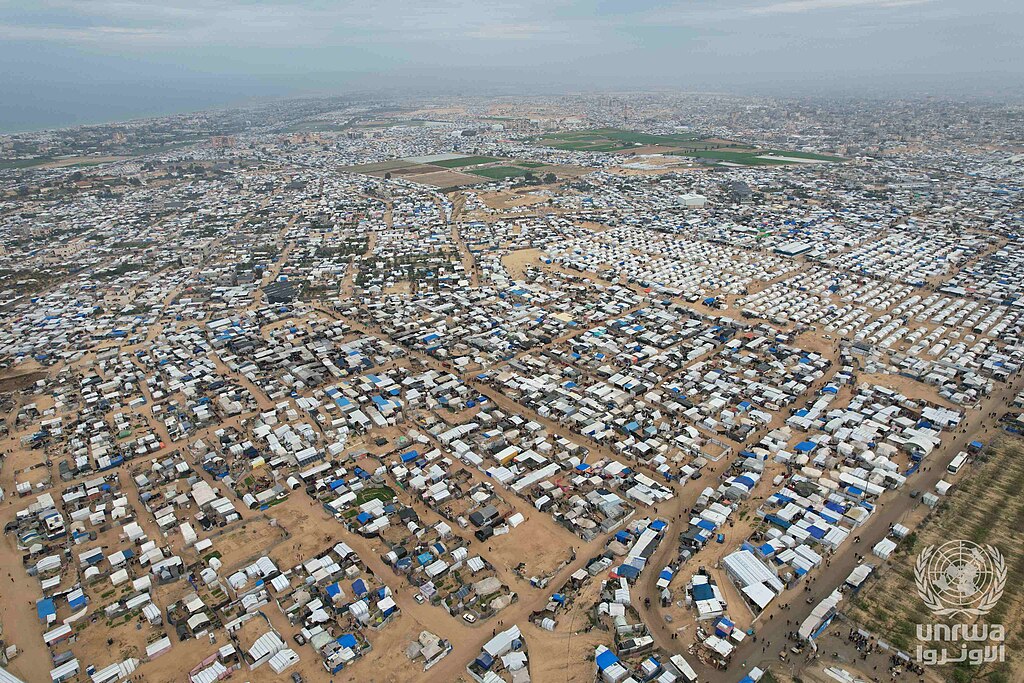
His son was born in the camp. He never saw Al-Zeeb. Never saw the beach. His world was narrow alleys where the houses were packed so close together that sunlight barely reached the ground.
There are 58 recognized refugee camps today, most of them built between 1948 and the early 1950s. Temporary. They were always supposed to be temporary. But here is the thing about "temporary": when you leave it unimproved long enough, it becomes someone's whole life. The camps were deliberately kept incomplete. To make them better would mean accepting that the people inside them weren't going home.
This man got married in the camp. His children were born there. He opened a small shop, celebrated festivals, buried neighbors. He lived, properly lived, inside a structure the international community still officially called temporary.
He died where he was born. A registered refugee his entire life, without ever having left.
The Third Generation
The grandson grew up in the same tent. Same key on the same wall.
After October 2023, he was displaced again. According to UNRWA and IRC data, more than 90 percent of Gaza's population (approximately 1.9 million people) were displaced between 2023 and 2025. Many families moved three times. Some moved eight. Around 70 to 80 percent of Gaza's population are descendants of the original 1948 refugees. Which means those who were already displaced got displaced again. Refugees from a refugee camp.
This boy sleeps in a broken building now. Or a school corridor. Or a tent.
He has the key.
He doesn't know the village it belongs to. Can't read the language on the land papers. Has never seen the beach, or the door, or the house. But he holds the key because holding it is the only answer anyone has ever given him about where he is from and whether he will ever go back.
The Architecture of Waiting
This isn't tragedy in the literary sense, something that befell people, random and vast. It is a political system, seventy-seven years old, still functioning as designed.
In 1948, UN General Assembly Resolution 194 recognized the right of Palestinian refugees to return to their homes. Since then, that right has been reaffirmed more than 135 times. UNRWA was built not to resettle refugees but to support them until a "just and lasting solution" was found. The solution has not come. According to the BADIL Resource Center, Israeli citizenship and property laws make return legally impossible in practice, whatever the resolutions say.
The law exists. The resolutions exist. The return does not.
What Remains
The grandfather thought it was a matter of weeks. His son spent a lifetime waiting. The grandson doesn't know what he's waiting for. Only that the waiting has been going on longer than anyone alive can remember, and that no one in a position to end it has chosen to.
But the key is still there.
In a tent, in Gaza, in the hands of a boy who has never seen the door it opens. Some things survive bombs. Some things survive decades of deliberate forgetting. Some things keep existing, inconvenient, unanswered, undeniable, long past the point where everyone in power has agreed to stop talking about them.
The key is one of those things.