Nabil's eight-year-old daughter does not go to school in the mornings. She goes to her father first.
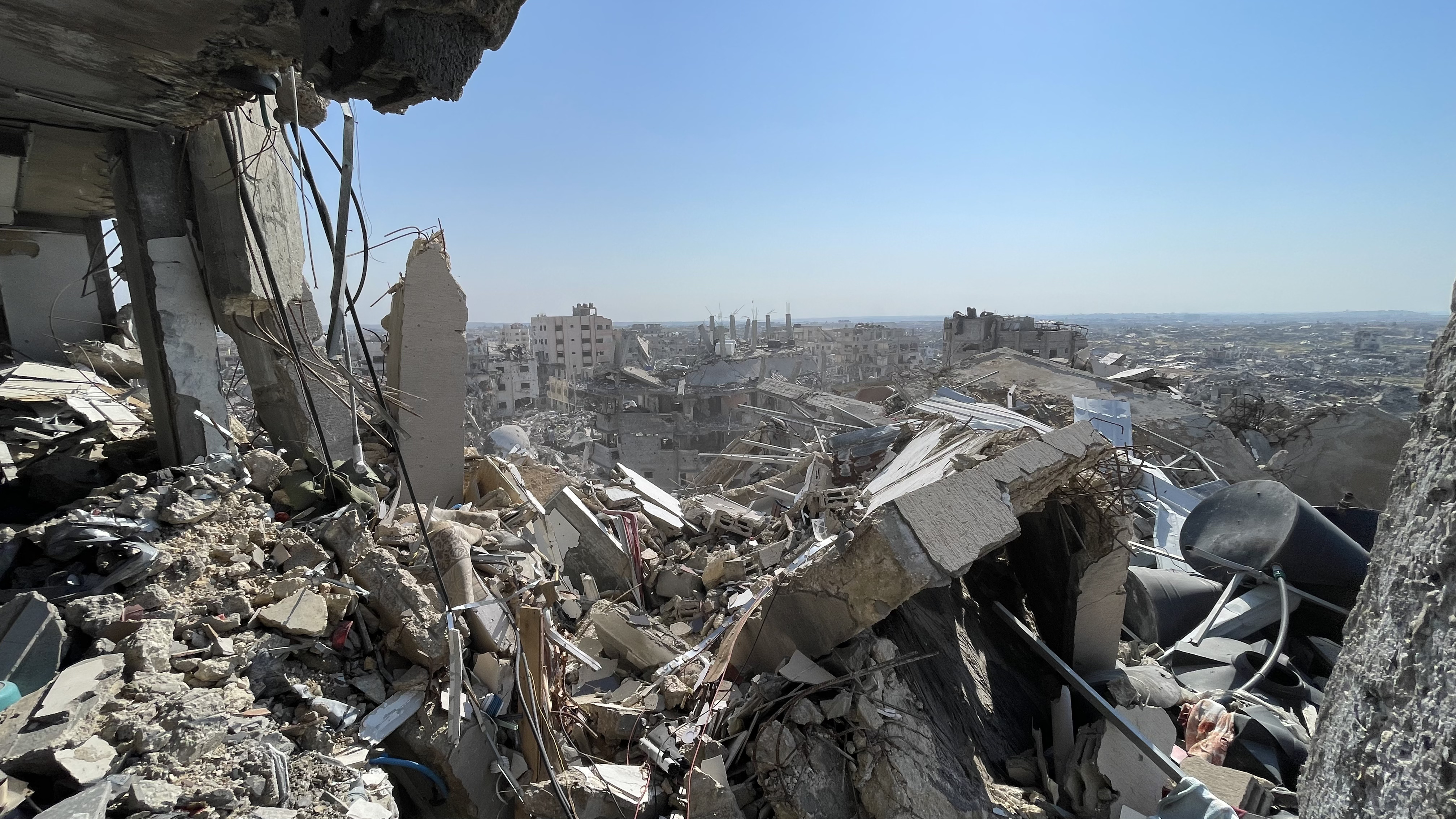
An airstrike took his leg in December 2025. The family home in Khan Younis collapsed. His wife carried him to a field hospital, where doctors cut below the knee and cauterized the wound. Then they sent him back to his tent. No crutches. No prosthetic. No follow-up care of any kind.
So his daughter drags him on a plastic sheet to reach the latrine.
This is what disability looks like in Gaza right now. Not a support system struggling under pressure. No system at all.
Before October 2023, an estimated 58,000 to 92,000 Palestinians in Gaza already lived with some form of disability. That number has since grown past 100,000. Amputations alone exceed 6,000, the highest per-capita rate of limb loss since World War II, according to Save the Children. Wheelchairs have been crushed under rubble. Prosthetics clinics have been bombed. And the people who survived are living on sand, in tents, with nowhere to move and no one to help them move.
The humanitarian system has not caught up. The World Health Organization reports that less than 10 percent of emergency health supplies in Gaza are designed for people with disabilities. Evacuation orders do not account for those who cannot walk. Aid distributions happen far from camp entrances, beyond the reach of wheelchair users. Shelters are not accessible. In a territory where survival requires constant movement, immobility is its own kind of death sentence.
Local organizations are still trying. Atfaluna Society for Deaf Children lost its main clinic in an airstrike and now runs mobile services from a van. Al-Amal for Rehabilitation continues to operate from a damaged building, with exhausted resources and no timeline for resupply. The Palestinian Ministry of Social Development has lost contact with most of its caseworkers. These are not institutions failing their mandate. They are institutions being destroyed while trying to meet it.
Nabil's story is not unusual. Across Gaza, thousands of people lie on mattresses in tents and on school floors, unable to wash, unable to pray, unable to reach what little food exists. There is no home care system. No visiting nurses. Only family, already hollowed out by loss, doing what they can with what is left.
Disability has been treated as a secondary issue in this crisis, not a survival issue. But a person who cannot walk cannot flee. A child without a prosthetic cannot attend a tent school. A deaf adult cannot hear an evacuation warning. These are not edge cases. They are 100,000 people.
What Yafa Relief is doing, and what you can do.
Yafa Relief funds direct mobility aid and trained home care visits for disabled Palestinians who cannot access formal services. A wheelchair costs $150. A set of crutches costs $15. A single home care session costs $10.
For Nabil, for his daughter, for the thousands like them, these are not small amounts. They are the difference between waiting and living.
The war did not only take legs. It took independence. It took dignity. Giving back even a fraction of that is not charity.
It is a debt.
Donate at yafarelief.org
Every dollar goes directly toward aid for Palestinian families in Gaza.