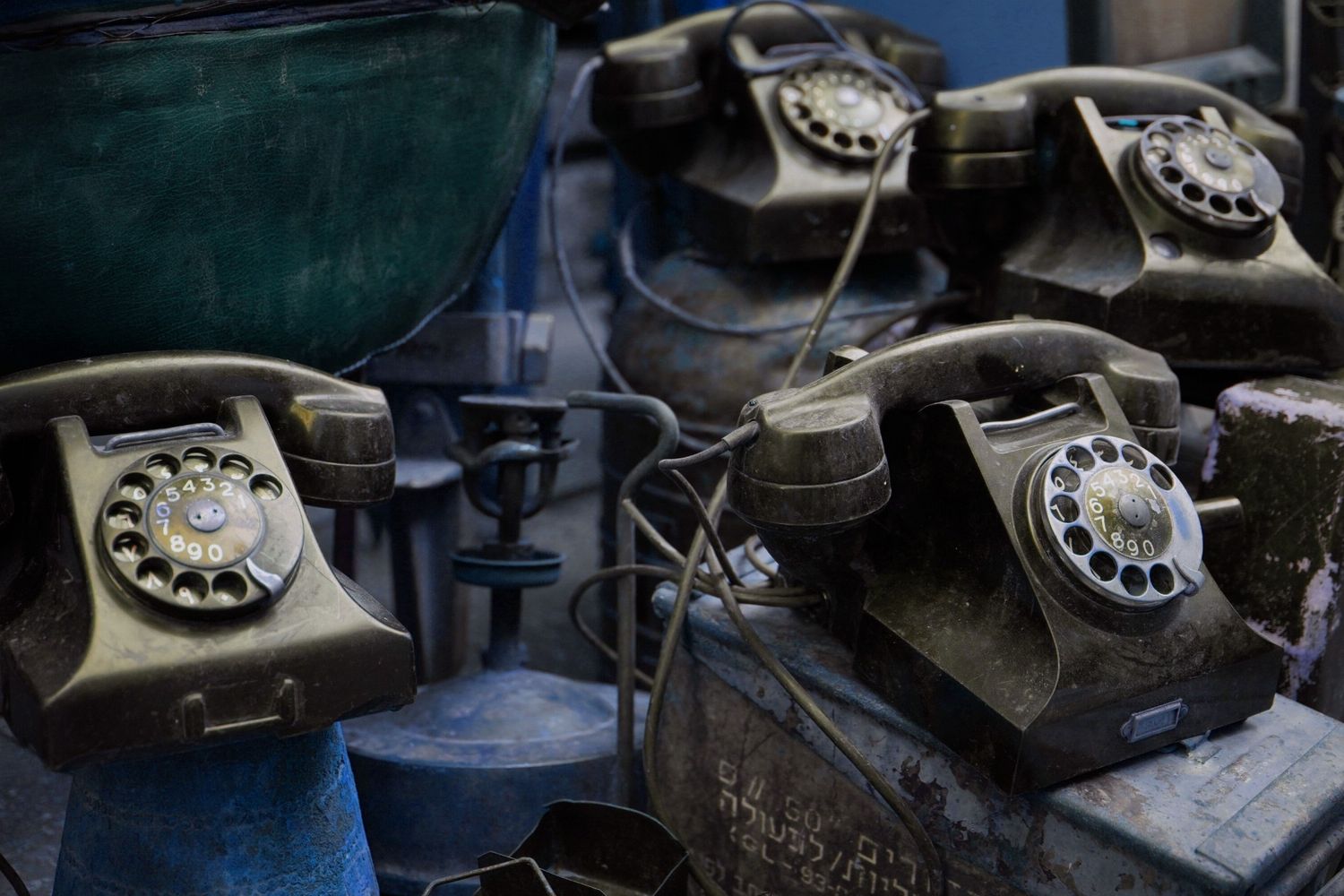
For most people, making a phone call is something they barely think about.
You pick up your phone.
You dial a number.
And a few seconds later, someone answers.
But when everything around you is uncertain, even making that simple call can become a challenge.
Finding a signal can mean walking to the edge of a road.
Climbing to a higher place.
Standing outside for several minutes, holding a phone above your head and hoping that, this time, the call will connect.
A phone can become more than a way to communicate.
It can become a lifeline.
A mother calling to check on a relative.
A father trying to find out whether someone made it safely to another area.
A child waiting to hear a familiar voice.
Sometimes, the call lasts only a few seconds.
Sometimes, it never connects at all.
And sometimes, the person on the other end is the only thing that makes a difficult day feel a little less lonely.
There is no guarantee that a phone will have enough battery.
There may not be anywhere nearby to charge it.
The signal may disappear just when someone finally answers.
A message may take hours to send.
But people keep trying.
They move from one place to another looking for a stronger connection.
They save battery wherever they can.
They hold onto their phones because they know that one call could matter.
These moments rarely make the news.
No one takes a photograph of someone standing alone, waiting for a signal.
No headline talks about the person who spent half the day trying to reach a family member.
Yet for the person making that call, it can mean everything.
Because in a crisis, knowing that someone is safe can bring a kind of relief that food, shelter, or supplies cannot provide on their own.
A familiar voice can remind someone that they are still connected to a life beyond the uncertainty around them.
A simple message can tell a family that someone made it through the day.
And sometimes, just hearing "I'm here" is enough.
Communication cannot rebuild a home.
It cannot repair a damaged road.
It cannot make an uncertain situation disappear.
But it can do something important.
It can remind people that they are not facing everything alone.
That is why people keep looking for a signal.
They keep trying the call.
They keep sending the message.
They keep waiting for those few words that tell them someone they love is still there.
The next time you see someone holding a phone, remember that it may be more than just a device in their hands.
It may be a connection to a parent.
A child.
A friend.
A neighbor.
A home they had to leave behind.
Sometimes, the most important thing someone can receive is not a box of supplies or a meal.
Sometimes, it is simply a voice on the other end of a phone saying,
"I'm here."